
Atlantic Beach NC Speckled Trout Fishing Guide
Speckled Trout Fishing in Atlantic Beach - What to Expect
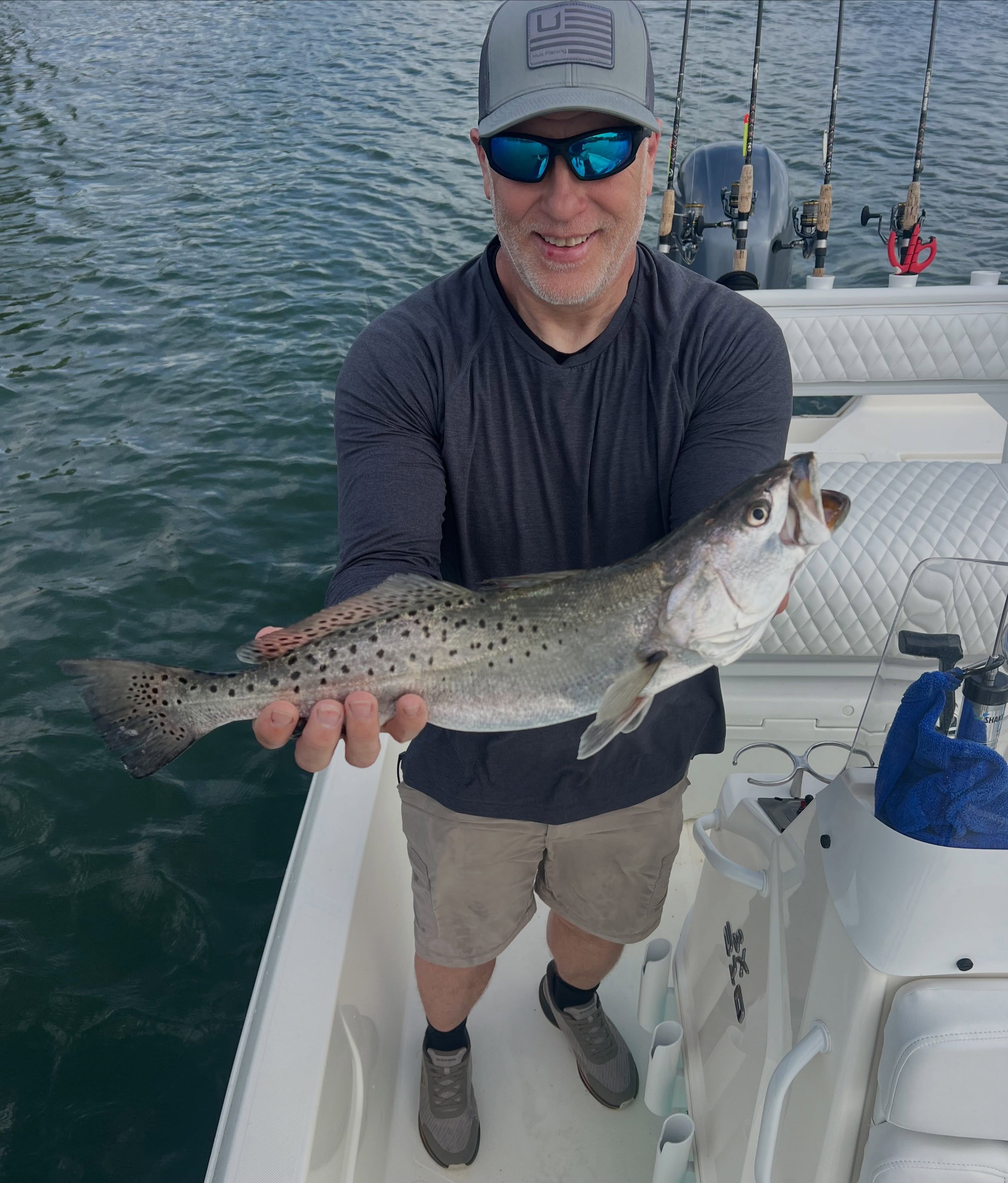
Fishing Charter by Captain William Gillikin in June
- Toptier North Carolina Fishing Charter


Summary
Join a fishing charter in Atlantic Beach, NC on Tuesday, June to target speckled trout with Captain William Gillikin of Local Knowledge Charters. This saltwater fishing experience showcases the abundant trout populations in Atlantic Beach waters, where anglers learn species behavior and effective techniques for consistent catches throughout the day.
Fishing Charter with Captain William Gillikin - Rates & Booking
Captain William Gillikin of Local Knowledge Charters operates fishing charters in Atlantic Beach, NC on Tuesday, June 9th and throughout the season. His charter specializes in targeting speckled trout and other inshore species in the productive Atlantic Beach waters. Captain Gillikin brings local expertise and knowledge of seasonal patterns, fish behavior, and proven techniques that increase your chances of landing quality catches. To inquire about availability, pricing, and booking your charter, contact Local Knowledge Charters directly.
Highlights of Speckled Trout Fishing
Speckled trout fishing in Atlantic Beach offers exciting action with fish that range from keeper-size to trophy specimens. The Atlantic Beach waters provide ideal habitat for trout year-round, with seasonal peaks that offer consistent fishing opportunities. Captain Gillikin focuses on structure and bottom composition where trout congregate, using both live bait and artificial lures depending on conditions and fish activity levels.
The experience combines technical skill with natural surroundings. Anglers learn to read water conditions, identify productive areas, and present baits or lures effectively to trigger strikes. Atlantic Beach's protected sound waters and coastal channels create varied fishing environments, from shallow flats to deeper drop-offs where speckled trout hold.
Local Species Insights: Speckled Trout
Speckled trout, also called spotted seatrout, are one of the most popular saltwater gamefish in Atlantic Beach waters. These fish get their name from the distinctive dark spots covering their backs and sides. They typically range from 12 to 24 inches, though larger specimens are caught regularly. Understanding their behavior improves your success on the water.
Speckled trout prefer structured habitats where they can ambush prey. They relate to shallow grass beds, dock pilings, oyster bars, channel edges, and sandy bottom areas with shell or rock. The fish are active feeders, hunting small baitfish and shrimp throughout the water column. In Atlantic Beach, trout move based on tidal flows, water temperature, and light conditions. Early morning and late afternoon typically produce the most aggressive feeding activity, though fish feed throughout the day during overcast conditions.
Temperature significantly influences trout behavior. They thrive in Atlantic Beach's moderate salinity and stable water conditions, which support year-round populations. During winter months, trout move to deeper channels seeking warmer water. Spring and fall bring peak fishing as water temperatures stabilize and trout spread across shallow feeding grounds. Understanding these seasonal shifts helps Captain Gillikin position his charters for optimal fishing opportunities.
Speckled trout are strong fighters that frequently jump when hooked. Their lateral line runs from gill to tail, with small teeth lining their upper jaw. This mouth structure makes hook sets important - sudden, firm strikes help penetrate and secure the hook. Trout also use their speed and maneuverability to throw hooks or wrap line around structure, so proper drag setting and rod control are essential techniques for successful landings.
The charter experience teaches practical trout-fishing skills beyond just technique. You'll learn to identify productive water by reading surface conditions, observing bird activity, and recognizing structural clues. Captain Gillikin shares knowledge about local tidal patterns, seasonal movement, and how weather systems influence trout activity. These insights build fishing competency that extends beyond a single trip.
Plan Your Fishing Day
A typical speckled trout charter begins in early morning when trout feeding activity peaks. Captain Gillikin will likely focus on shallow grass flats, shell bars, and channel edges where trout congregate. The charter involves casting or live-lining baits, working artificial lures, and moving between productive spots based on fish activity and conditions. Bring sunscreen, polarized sunglasses, and appropriate clothing for changing weather. Most charters accommodate 1-4 anglers comfortably, allowing personal attention from the captain and room to move around safely on deck.
Fishing in Atlantic Beach, NC: Spotted Weakfish

Spotted Weakfish Overview
The Spotted Weakfish (Cynoscion nebulosus) is one of the most sought-after gamefish in the coastal waters of the Gulf of Mexico and throughout the Southeastern United States. Despite its common nickname "spotted seatrout," this remarkable species is actually a member of the Sciaenidae family—the drum fish family—and belongs to the order Perciformes. What makes the Spotted Weakfish so distinctive is its compressed, elongated body adorned with irregular faint spots across its upper half, combined with a metallic silver coloring that transitions from dark grayish-blue on top to tan or white on the belly. Anglers and seafood enthusiasts have cherished this species for decades, and it's easy to see why: these fish are abundant in their native waters, relatively straightforward to catch, and absolutely delicious on the dinner table. From casual fishing trips in Florida to serious expeditions along the Atlantic seaboard, the Spotted Weakfish remains a favorite target for both recreational and commercial fishers seeking an unforgettable experience.
Spotted Weakfish Habitat and Distribution
The Spotted Weakfish is endemic to the Western Atlantic Ocean, with a range stretching from Massachusetts down to South Florida, and it thrives throughout the entire Gulf of Mexico. As a demersal fish—meaning it prefers to stay on or near the ocean floor—this species has developed a sophisticated relationship with its coastal environment. You'll find them hunting in shallow coastal and estuarine waters, over sandy bottoms and seagrass beds at depths reaching up to 33 feet. These fish are adaptable creatures; during warm summer months, they move closer to shore and into shallower waters, but as temperatures drop, they retreat to deeper oceanic zones. The fish favors both salt and brackish water environments, making inlets and estuaries prime hotspots for encounters. Around major fishing hubs like Florida and along the Carolina coastlines, these waters represent reliable year-round destinations for connecting with this exceptional species.
Spotted Weakfish Size and Weight
Most Spotted Weakfish you'll encounter in typical fishing situations measure between 12 to 16 inches in length and weigh somewhere in the 3 to 7 pound range—perfect for a satisfying day on the water. However, these fish have the potential to grow considerably larger. The average maximum size reaches approximately three and a half feet in length with weights around 17 and a half pounds, which would represent an exceptional catch for most anglers. The world record Spotted Weakfish stands at an impressive 17 pounds and 7 ounces, measuring 39 inches long—a trophy taken by Orlando angler Craig Carson off Fort Pierce Inlet in Florida. Understanding these size benchmarks helps anglers set realistic expectations and appreciate the specimen they've worked to land, whether it's a keeper-sized fish or a genuine record-breaker.
Spotted Weakfish Diet and Behavior
The Spotted Weakfish is a masterful ambush predator with a hunting strategy that's both efficient and exciting to witness. These fish are known to lunge at prey that happen to pass through their territory, relying on their large, canine-like teeth to secure their meals. Their diet consists primarily of smaller fish species including anchovies, pinfish, silversides, mullet, croaker, silver trout, snapper, and gobies, supplemented by crustaceans like shrimp. The Spotted Weakfish hunts actively throughout much of the day, moving from the water's bottom to the surface in search of feeding opportunities. This behavior makes them highly responsive to lures and bait presentations, which is one reason why they're so popular among anglers. Beyond humans, these fish face predation from striped bass, alligator gar, barracuda, porpoises, and sharks, as well as seabirds such as cormorants and pelicans. Their average lifespan of 8 to 10 years allows them to develop considerable wisdom and wariness as they mature.
Spotted Weakfish Spawning and Seasonal Activity
The reproductive cycle of the Spotted Weakfish is a fascinating display of seasonal behavior that transforms their habitat. Spawning begins in spring and continues through late summer, with the fish typically engaging in this activity at night. Male Spotted Weakfish are particularly vocal during this period, announcing their presence through distinctive croaking sounds approximately two hours before sunset—a behavior that gives the Sciaenidae family its "drum fish" reputation. While these fish spend most of their lives in oceanic coastal waters, they undergo a significant migration during spawning season, moving into bays and estuaries to reproduce. A single female can produce an astounding 15,000 to 1,100,000 eggs per spawning event, and these eggs hatch within just 18 hours of fertilization. The young Spotted Weakfish form small schools of about 50 individuals, remaining together until they reach juvenile stage, at which point they disperse to their natural nursery habitats including seagrass beds, sandy bottoms, muddy bottoms, and reefs.
Spotted Weakfish Techniques for Observation and Capture
Fly-Fishing and Light Tackle Approach: The Spotted Weakfish is an eager responder to fly-fishing techniques and colorful lures, particularly when in active hunting mode. These fish hunt throughout the water column from bottom to surface, so adding weight to your presentation isn't necessary—the fish will come to your bait once spotted. The key technique is to retrieve slowly at first, making your bait or lure appear as if it's casually swimming through the water. As soon as you detect an approaching fish, accelerate your retrieve slightly to mimic a fleeing prey item; this triggers a more aggressive strike that sets the hook deeper into the fish's mouth. This strategy is crucial because the Spotted Weakfish has a notoriously soft mouth, and hooks can easily pull free if not firmly embedded. Around Florida's coastal rivers and the Gulf of Mexico, experienced guides recommend early morning sessions during the summer months when these fish are most active and aggressive.
Bottom and Shallow Water Fishing: Since Spotted Weakfish are demersal by nature, fishing along sandy bottoms and over seagrass beds—especially in the 10 to 33-foot depth range—yields consistent results. Use medium-weight spinning rods with 10 to 15-pound test line and cast live or cut bait near structure where these fish are likely to ambush prey. Small shiners, shrimp, and mullet chunks work exceptionally well. Fish the shallow estuaries during high tide and the slightly deeper channels during low tide for optimal positioning. Patience and subtle movement of your bait will often outperform aggressive presentations.
Sight Casting in Clear Water: In clear, shallow waters typical of Florida's coastal areas, sight casting to visible Spotted Weakfish can be incredibly rewarding. Polarized sunglasses and a quiet approach allow you to spot feeding fish and present lures or bait directly to them. Small jigs, soft plastics, and topwater plugs create excellent results when accuracy and presentation are prioritized. This visual hunting method transforms fishing from a waiting game into an active, engaging pursuit.
Spotted Weakfish Culinary and Utilization Notes
The Spotted Weakfish has earned its stellar reputation as a table fish through generations of satisfied diners. The meat is known for having an excellent, delicate flavor that stands up beautifully to various cooking methods. Steaming, broiling, and baking are considered the best preparation techniques, allowing the natural taste of the fish to shine without overwhelming heavy sauces. The flesh is firm yet tender, making it versatile for both traditional and contemporary recipes. One noteworthy characteristic anglers should know about is the occasional presence of harmless "spaghetti worms"—parasitic nematodes that look concerning but pose no risk to human consumption and are easily removed during filleting. From a nutritional standpoint, Spotted Weakfish provides excellent protein, omega-3 fatty acids, and essential minerals, making it a healthy choice for seafood enthusiasts. The combination of abundance, ease of capture, and culinary excellence has made this species a cornerstone of both recreational and commercial fishing operations throughout its native range.
Spotted Weakfish Frequently Asked Questions
Q: What is the best bait or lure for catching Spotted Weakfish?
A: Live shrimp, mullet, anchovies, and small shiners are top bait choices. For lures, colorful options including small jigs, soft plastics, and topwater plugs work well. Fly fishers have success with colorful streamers and baitfish patterns. The key is matching your presentation to the natural prey in the area and retrieving at a pace that triggers aggressive strikes.
Q: Where can I find Spotted Weakfish near major fishing destinations?
A: Spotted Weakfish are abundant throughout the Gulf of Mexico, along the Florida coastline, and up the Atlantic seaboard to Massachusetts. In Florida specifically, Fort Pierce Inlet, Tampa Bay, and various coastal rivers provide excellent opportunities. Look for shallow estuaries, seagrass beds, and sandy bottoms in 10 to 33 feet of water during appropriate seasons.
Q: Is Spotted Weakfish good to eat?
A: Absolutely! Spotted Weakfish is considered excellent eating with a delicate, mild flavor. Steam, broil, or bake for best results. The flesh is firm and versatile, making it suitable for various culinary preparations. The only consideration is removing the harmless parasitic worms if present, which is a simple filleting task.
Q: When is the best time to catch Spotted Weakfish?
A: Warm summer months (May through September) represent peak season as fish move to shallower waters and feed more actively. During spawning season (spring through late summer), nighttime fishing can be particularly productive. Early morning and late afternoon sessions often produce excellent results year-round in appropriate habitats.
Q: Why do they call them "weakfish" if they're strong fighters?
A: The name "weakfish" refers to the fish's soft mouth rather than its fighting ability. Despite being active, aggressive hunters, the soft tissue inside their mouth makes hooks prone to pulling free during battle, requiring careful, steady pressure rather than hard, jerky movements when fighting a hooked fish.
Q: What's the world record Spotted Weakfish?
A: The world record stands at 17 pounds and 7 ounces, measuring 39 inches long. This exceptional specimen was caught by Orlando angler Craig Carson off Fort Pierce Inlet in Florida, representing the gold standard for what these remarkable fish can achieve in their native waters.